
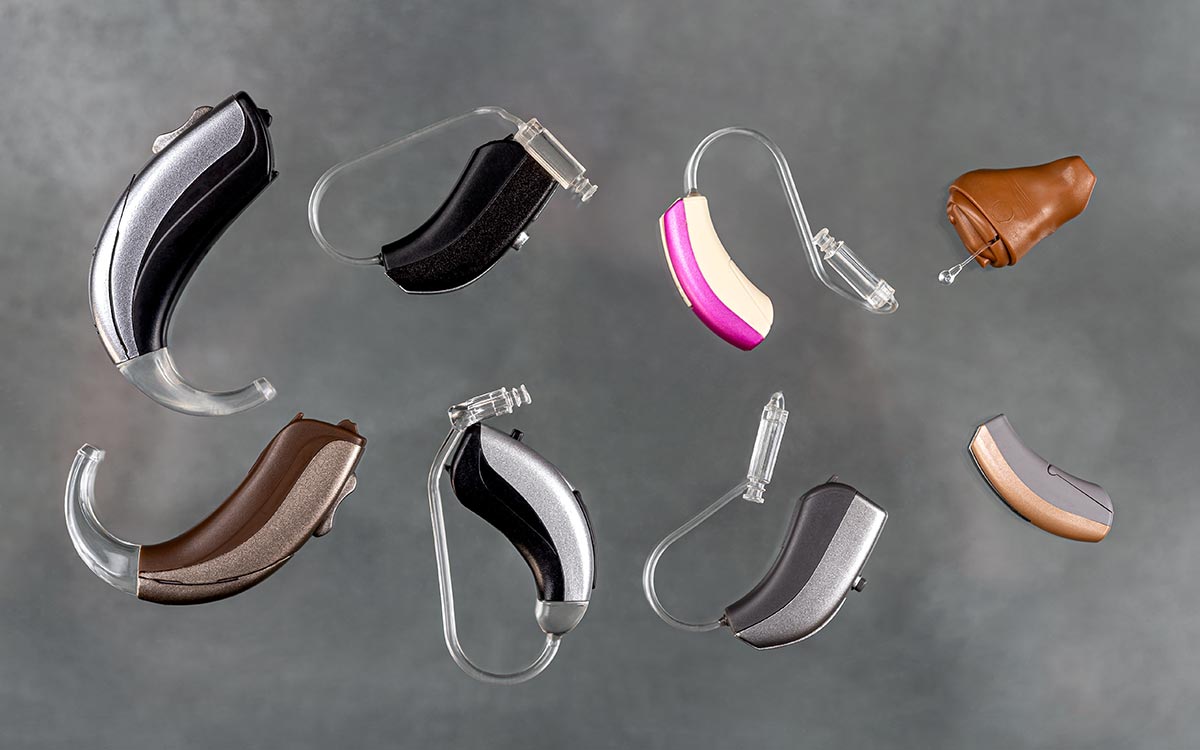
With so many choices in terms of size, style, and technology, the process of picking an instrument can feel quite intense. Rest assured that there is an assistive device tailored to every lifestyle and degree of impairment. The key is simply choosing the one that fits you best.
By learning about the distinctions among various hearing aid models, you can move forward with greater confidence and knowledge. We are going to study the primary styles available today to help you understand what sets each option apart.
In-the-Canal (ITC) Hearing Aids
The Definition:
An ITC device is engineered to rest partially within the ear canal while showing just a small section in the outer ear area.
The Perks:
- Offers an improved shape than bulkier behind-the-ear units
- Specifically contoured to the user’s ear for an optimal fit
- A useful option for those with moderate hearing needs
First-time wearers frequently gravitate toward ITC aids because they strike an ideal compromise between size and performance.
IIC (Invisible-in-Canal) Technology
The Idea:
These are the tiniest custom-made units on the market today. This style rests deep in the ear for a completely covert appearance.
Why they are favored:
- Offers the most understated design of any hearing aid style
- Microphone placement helps mimic the ear’s natural sound collection
- Lightweight and comfortable
Because of their tiny size, IIC devices typically work best for mild to moderate hearing loss and for those who prefer a nearly invisible option.
In-the-Ear (ITE) Hearing Aids
Structural Info:
These models fill either the complete or bottom half of the outer ear bowl. They are custom-made to fit the contours of your ear.
Why people select them:
- The increased surface space provides space for extra functionality and extended power
- Great for seniors who find smaller devices difficult to manipulate
- Effective for an extensive range of hearing impairments, ranging from mild to severe
Users often select these models for their straightforward, single-piece construction that avoids any external wiring or tubing.
Exploring BTE (Behind-the-Ear) Designs
Technical Detail:
Placed securely on the back of the ear, BTE models sit on the outer ridge. Audio travels into the ear canal through an internal tube or custom earmold.
Key Strengths:
- Known for remaining remarkably adaptable and robust
- Provides a wide selection of amplification suitable for nearly any user
- The size provides plenty of room for the latest connectivity features and rechargeable hardware
The combination of user-friendliness and strong sound makes BTE aids a top contender for many patients.
RIC (Receiver-in-Canal) Overview
Component Structure:
RIC hearing aids appear comparable to BTE models, but the speaker (receiver) sits inside the ear canal rather than inside the device behind the ear.
Market Interest:
- Very organic sound quality
- Offers a very low-profile appearance that is easy for almost everyone
- RIC technology is highly flexible for many different audiogram profiles.
RIC devices are one of today’s most common styles, thanks to their blend of comfort, aesthetics, and performance.
Long-Term “Set and Forget” Devices
Usage Profile:
A hearing specialist inserts these specialized hearing aids deep into the canal, where they remain for multiple weeks.
User Motivations:
- Provides a hassle-free experience with no daily maintenance required
- They are virtually hard for people to notice because of their depth
- Engineering allows them to remain in the ear during all facets of daily life
For a “hands-off” method of auditory assistance, extended-wear technology is the top recommendation.
Connected Wireless Systems
Digital Attributes:
Bluetooth-ready hearing aids enable an electronic bridge between your hearing technology and your smart devices.
Modern Perks:
- Send calls, music, and audio directly to the hearing aids
- Adjust settings via an app
- Perfectly matched for the requirements of an advanced, connected individual
You can find Bluetooth capabilities built into an array of form factors, from RIC and BTE to custom ITC designs.
Alternative Surgical Solutions
Design Overview:
An operatively implanted device that physically vibrates the middle ear bones to amplify sound.
Why implants are used:
- Choice for those who cannot use traditional hearing aids
- This is a specialized alternative for those with chronic ear canal sensitivity.
Candidates for middle-ear implants must complete an exhaustive evaluation by an expert specialist.
Your Path to Improved Hearing
Every hearing aid style offers its own benefits, and the right option depends on your level of tinnitus or hearing loss, comfort preferences, lifestyle, and cosmetic considerations. By consulting an expert and scheduling a hearing test, you can explore various models and discover which one feels most natural to you.
Start moving toward a world of superior sound by arranging a consultation with an expert specialist. It’s a great first step toward better hearing and more confident communication every day.
Sources:
https://www.mayoclinic.org/diseases-conditions/hearing-loss/in-depth/hearing-aids/art-
20044116
https://www.hearinglife.com/hearing-aids/types
https://www.nidcd.nih.gov/health/hearing-aids